George Middle School
George students spend the day in poorly ventilated classrooms
Air purifiers that would clean classroom air at George are in district storage
Like nearly all PPS schools, George's HVAC system delivers low air-change rates in classrooms and other learning spaces. The district's own measurements show that George does not meet health-based goals for ventilation, air filtration, and clean indoor air. The best way to reach healthy air targets is with a combination of building ventilation and effective in-room filtration, but George currently fails on both.
The one air purifier originally assigned to George‘s rooms is insufficient and undersized for George classrooms and large spaces. Two or more air purifiers per classroom can substantially improve air quality, reduce respiratory viruses and air pollutants, and achieve effective air cleaning, while running at quiet settings.
Two air purifiers are needed in George's classrooms, cafeteria, kitchen, auditorium, library, main office and staff lunchroom to more effectively clean the air. That’s why the Oregon Health Authority provided additional free air purifiers for George in 2023. The district received these units, enough for a second air purifier in each classroom, but never delivered them to the school. George's second air purifiers are in district storage. Teachers and staff at George have also not gotten great guidance on running their one air purifier or why using two matters. At other PPS schools with the same problem, we've been able to help get this sorted out, especially when parents at a school work with us. To connect and support next steps for clean classroom air at George, join our George group, and learn more about George‘s air quality below.
Without air purifiers, George does not have clean indoor air
If no air purifiers are running:
✘ Coughs and sneezes in the typical George classroom linger and hang in the air for over 40 minutes
The median rate of airflow from the HVAC system to classrooms at George is only 3.5 air changes per hour.*
At 3.5 air changes per hour, it takes the HVAC system 40 minutes to clear out 90% of the respiratory aerosols being produced when kids and staff breathe, talk, sing, cough and sneeze. That is far too long for virus-laden respiratory aerosols and other indoor air pollutants to fill the air students and teachers are breathing.
But the median does not show how bad the lowest-ventilation rooms are …
✘ Classroom with the lowest ventilation: 106
0.3 air changes per hour
With airflow this low, how long do kids’ and staff’s viruses linger in room 106’s air?
>7 hours and 41 minutes
At 0.3 air changes/hour, 7 hours 41 minutes is how long it takes the HVAC system to clear out 90% of respiratory aerosols and other air pollutants.
✘ Without air purifiers, 2 more George classrooms have less than 2 air changes per hour
At 2 air changes per hour, it takes the HVAC system 1 hour and 9 minutes to clear 90% of the respiratory aerosols.
✘ 9 classrooms are between 2 and 3 air changes per hour & 18 more classrooms are between 3 and 6 – all below recommendations
Only 1 classroom meets our minimum health-based airflow target for the HVAC system alone of 6 air changes per hour or more, clearing 90% of aerosols out in 23 minutes or less.
Rm 162: 8.5***
***Excellent airflow: Just 16 minutes to clear 90% of aerosols in room Rm 162
Classrooms that meet the minimum goal of 6 have good airflow, but can be even better. At 12 air changes per hour, aerosols clear out by 90% in under 12 minutes.
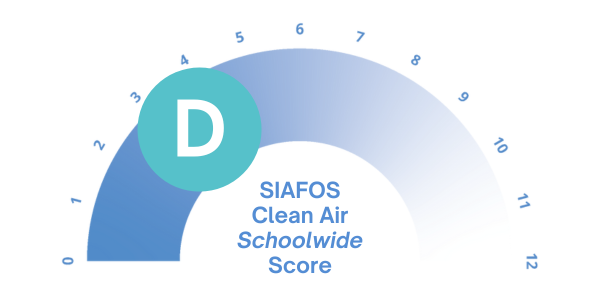
Sign up here to join the George group
About these ventilation measurements
These numbers come from airflow testing done in nearly every room of every PPS building, before the district resumed in-person learning in 2021. We carefully reviewed the district’s results, compiled and maintain a districtwide database from the airflow reports, and corrected gaps and errors in the data so that classroom ventilation and filtration are represented accurately. Our analyses provide ventilation rates from the HVAC system alone and show how total clean airflow increases when in-room air purifiers are used.
To learn more about the district airflow testing and how SIAFOS corrected the data, see this excerpt adapted from our McDaniel High School Air Quality Report: District airflow measurements & SIAFOS analyses. For the full room-by-room values, corrections, and calculations for this school, see George Middle School Analysis by SIAFOS.
One air purifier is undersized for George classrooms
With only one air purifier per classroom, George classrooms still lack clean air:
Although the Intellipure air purifiers originally assigned to George improve the school's clean airflow rates, they are insufficient in George classrooms. Even with an Intellipure air purifier running at its reasonable noise level (half speed), the classroom with the lowest ventilation from the HVAC system — room 106 — is still far below healthy airflow targets. With room 106 at 1.8 air changes per hour, kids’ and staff’s viruses in their respiratory aerosols linger for over 1 hour and 17 minutes.
At 1.8 air changes/hour, 1 hour 17 minutes is how long it takes for the HVAC system and Intellipure air purifier to clear out 90% of the respiratory aerosols being produced when kids and staff breathe, talk, sing, cough and sneeze.
With only one air purifier per classroom:
✘ Worst-airflow classroom (room 106) is still less than 2 air changes per hour
✘ 2 more George classrooms have less than 3 air changes per hour
✘ 22 classrooms are between 3 and 6 air changes – below recommendations
If one Intellipure unit is running at its quiet noise level, only 6 classrooms meet our minimum goal for healthy ventilation and filtration of 6 air changes per hour or more, clearing 90% of aerosols out in 23 minutes or less.
George needs two air purifiers per classroom to clean classroom air
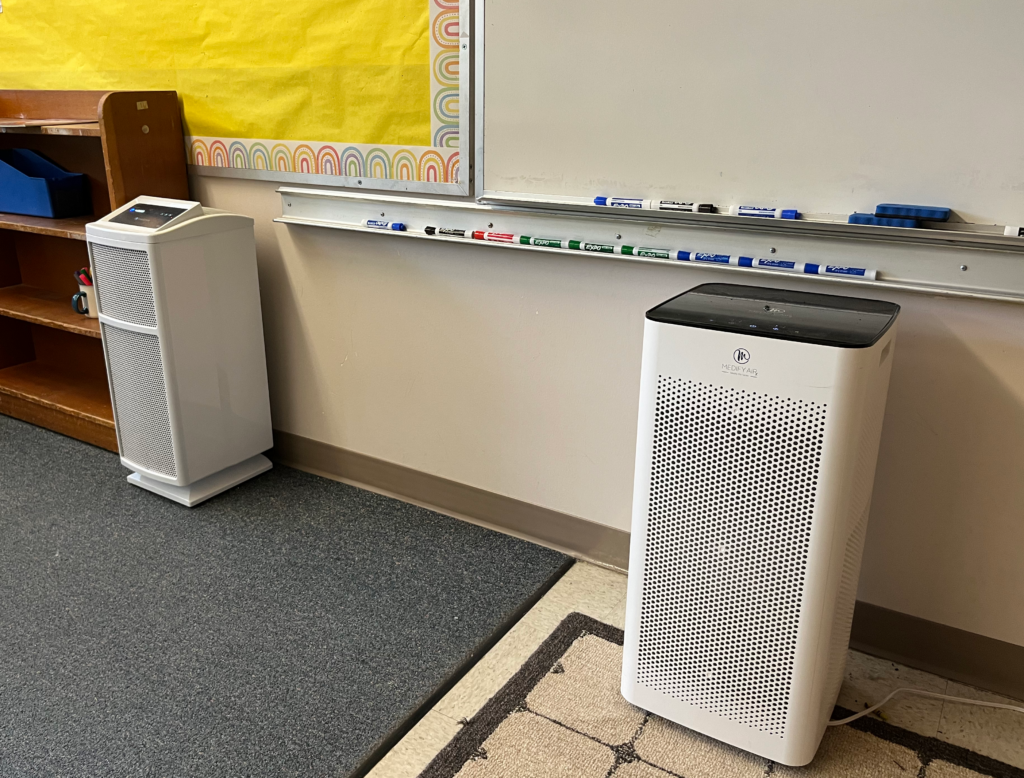
If George had two air purifiers per classroom, over half of the school would meet the minimum healthy air target
With two of the air purifiers the district already owns running at their best noise levels (one Intellipure at half speed and one Medify Pro at speed 2), 20 out of 31 George classrooms would be at 6 air changes per hour or higher. That includes 5 classrooms above an excellent 8 air changes per hour. Viruses, mold spores, dust and allergens, wildfire smoke, and other air pollutants would clear out by 90% in as little as 11 minutes.
The median clean airflow with two air purifiers per classroom would be 6.6 air changes per hour. At 6.6 air changes, the typical classroom at George would meet our minimum clean air goal, resulting in a solid level of respiratory protection.
Two air purifiers make a big difference — but some rooms would still fall short
In some George classrooms, the baseline ventilation is so low that two air purifiers alone cannot fully solve the problem. Even so, using both an Intellipure and a Medify Pro still makes a major difference in these rooms, reducing exposure for students and staff compared with using only one unit, or none.For example, George‘s worst-airflow classroom — Room 106 — is 5.0 air changes per hour even with two air purifiers. Although this is still below the minimum healthy air target of 6, it is far better than the 0.3 air changes per hour the room gets with no air purifiers running. Room 128 follows the same overall pattern, but at an even lower level: it reaches only 4.7 air changes per hour with two air purifiers, meaning that viruses, bacteria, asthma triggers, and other air pollutants linger in the classroom air for over 29 minutes. But without both air purifiers, Room 128 is only 2.4 air changes per hour. Room 106 is a third example with the same story. Even when operating two units, Room 106 is only 5.0 air changes per hour, but that airflow level is an important health protective improvement over the 0.3 air changes the room gets if relying on the HVAC system alone.
Visualizing how much air purifiers improve George classroom airflow
The graphs below show how little ventilation most George classrooms get without any air purifiers running. They also show how the addition of one air purifier per classroom shifts the rooms’ airflow rates higher but still leaves most rooms below health-based benchmarks for clean air. With two air purifiers per classroom, the pattern changes. Although two air purifiers would still leave 11 classrooms short of 6 air changes per hour, having two units per room would move most classrooms into the healthy air range above 6, and the lowest airflow classrooms would be much improved.
Number of classrooms vs air changes per hour
No air purifiers
HVAC only
Most George classrooms have poor airflow without air purifiers running. Most classrooms do not even reach 4 air changes per hour from the HVAC system.
One air purifier
One Intellipure air purifier running at its reasonable noise level still leaves most classrooms with inadequate airflow.
Two air purifiers
Most classrooms have good levels of clean airflow with two air purifiers. Many classrooms reach 7, 8, 9+ air changes per hour. But some rooms are still below 6, even with 2 units.
George needs its second air purifiers in classrooms, not in storage
The storage of George’s second air purifiers — as well as other PPS schools’ second units — has left resources meant to improve classroom health and safety sitting unused, when they could be making a meaningful difference to health and learning. George's second air purifiers should not be left in district storage when district data shows George's clear need for more air filtration capacity. These second units should be in classrooms and other school spaces, providing critical benefits of clean indoor air, such as reduced illness, improved learning, and better attendance.
Distributing and using this clean air infrastructure needs action at all levels, from district leadership to the classroom. Parents, caregivers, and school staff also have key roles to play to help get George's second air purifiers out of storage and into classrooms and ensure clean classroom air. Join SIAFOS and our George group to connect with others who care about clean, cool classroom air at George.
The data shows how George can improve air quality, reduce illness, and increase attendance
Why aren't second air purifiers already in George classrooms?
In 2023, PPS received 3500 free air purifiers — enough additional air purifiers to provide a second unit for every classroom in the district and other learning spaces as well. Instead of fully delivering on that commitment, previous district leadership used a flawed decision-making process that sent most units into storage rather than into classrooms. George was one of 68 schools affected by this choice. Errors in airflow calculations, inappropriate averaging methods, and misleading communications under previous leadership resulted in PPS erroneously concluding that schools like George did not need second air purifiers. A full explanation of how this occurred, and how PPS can correct course is available at:
In our analysis that corrects gaps in PPS’s airflow report, we have fixed errors and calculated classroom airflows with air purifiers running at speeds teachers can actually use.
Our airflow analysis provides room-by-room airflows at George when rooms have no air purifiers, vs. one air purifier, vs. two air purifiers.
See our full airflow analysis for George Middle School here.
Highlights from our comprehensive room-by-room analysis of George airflows
- With no air purifiers, 12 out of 31 classrooms are below 3 air changes per hour
- The HVAC system only provides the library with 3.3 air changes per hour, and the cafeteria is only 4.2
- With two air purifiers, no classrooms are under 3 air changes per hour, and 20 meet or exceed our minimum goal of 6 air changes per hour
Other SIAFOS analyses, reports, and campaigns
Learn more about indoor air quality in PPS with some of our other analyses, reports, and campaigns:
McDaniel High School Air Quality Report — our 144-page flagship report using the McDaniel cluster as a case study for districtwide problems, and solutions, for clean air
Benefits of Clean Indoor Air — improving air quality in PPS will increase student performance, reduce absences and educator sick days, improve health for students, staff, and surrounding communities, improve equity, and help mitigate impacts of climate change
Teacher Feedback on PPS’s Fall 2025 Temporary Cooling Measures — report on our survey of teachers in the 15 schools that received temporary cooling equipment in the fall 2025 heat wave
Sign-On Letter to Show Your Support for Clean Air in PPS — add your voice to our public letter calling for health-based ventilation and air quality in PPS
Airflow 101 Handouts: Understanding Airflow Sources in the Classroom and How Using Two Air Purifiers Allows Quiet Speed Settings
Poor airflow in George and other PPS schools is why we worked with parents across the district in spring 2023 to advocate that PPS classrooms need additional, high quality air purifiers to provide safe air to kids now, when HVAC system overhauls will take the district years to do in all schools and a mix of ventilation from HVAC systems and in-room filtration is the best approach for clean classroom air in both newly modernized buildings and older buildings alike. Just as we were advocating to the school board for the need for additional filtration capacity in PPS classrooms, the Oregon Health Authority announced a program offering free Medify air purifiers to any K-12 schools in Oregon. When it became clear that district staff were not planning to sign up for any of the free air purifiers from OHA, we made the case for why George needed these additional units. Parents from across the district joined SIAFOS in advocating that the district take full advantage of the program.
How can you help with clean air for George?
Let's get George's second air purifiers out of storage and into George classrooms — Sign up to help fix this so these air cleaners get delivered and running quietly to keep George classroom air clean!
Two air purifiers running at quiet settings in each classroom would provide more air filtration to the 12 George classrooms that do not even get 3 changes of air per hour and the 18 classrooms that only get between 3 and 6! Using multiple air purifiers would also ensure George‘s cafeteria, where kids pack in close to eat lunch, and library and other key spaces get better air quality, too.
Join us to be part of a group of parents and community members advocating for strategic, effective, and science-based planning for sufficient ventilation and filtration capacity in PPS schools — including George. PPS air quality efforts have cycled between strong progress as well as periods of inaction and missteps. We are now working more collaboratively with district leadership, yet long-standing gaps in ventilation and air filtration persist across the district — which is why parent, staff, and community involvement at the classroom level, school level, and district level remains so important.
Changing our schools in PPS to have good air quality practices only happens when families and staff work together. When you join us, we’ll connect you with others and share simple processes that help PPS kids and staff, including kids and staff at George, learn and work in classrooms with cleaner air, less illness, and healthier learning environments. Sign up below to join our organizing for PPS air quality!
*Notes on our numbers
Air changes per hour given on this page are “equivalent” and include ventilation and filtration. These numbers are based on the district’s airflow report for George, conducted in August 2021 (available at safeairoregon.org/original-airflow-reports) but corrected gaps and errors.